Silver Denarius of Sextus Pompeius Fostlus, Rome - Latium (137 BCE)
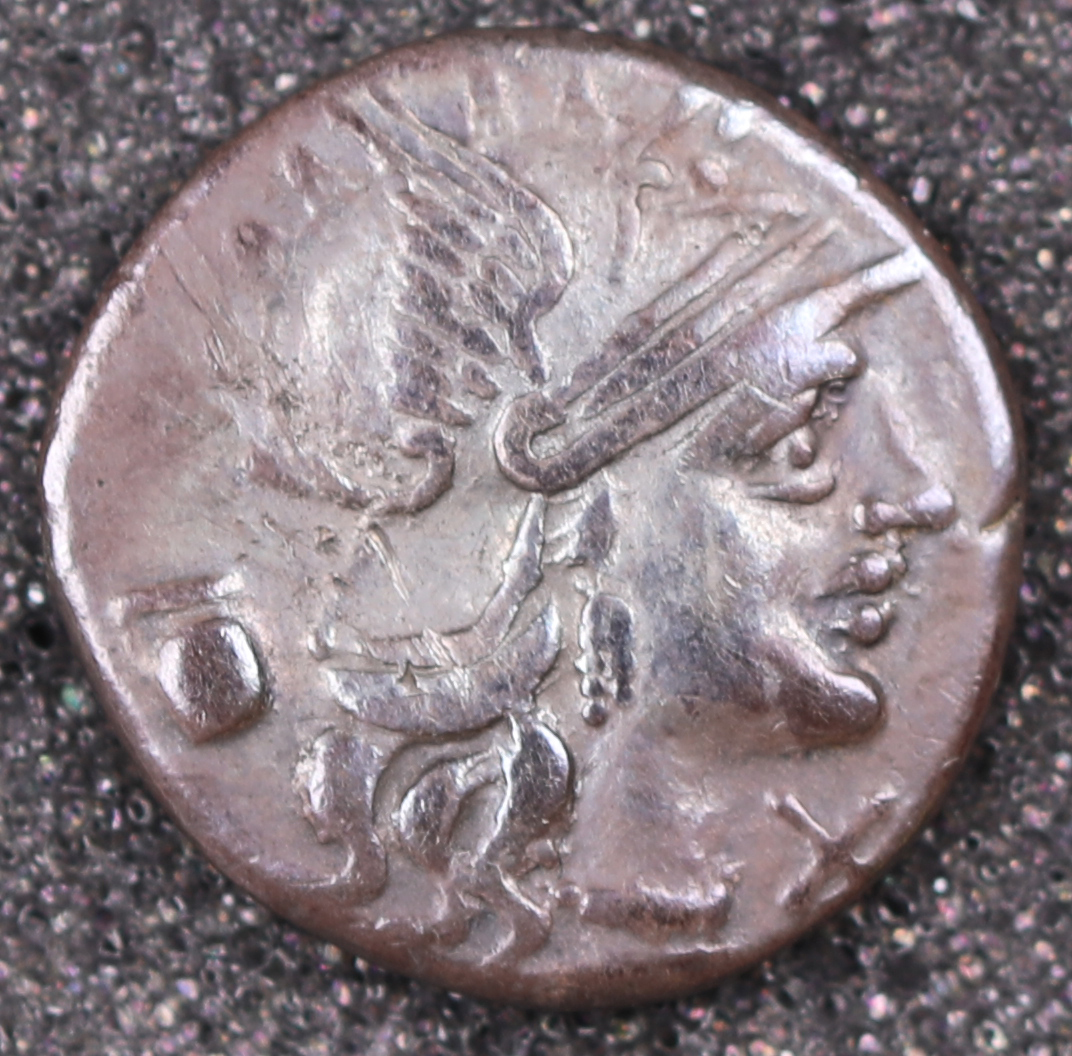
In 137 BCE, when this coin was minted, Rome was triumphant following the Punic Wars, the defeat of Corinth, and the establishment of the provinces Macedonia and Africa. It was common to represent Roman military victories with women including Roma. She appeared as the personification of the Roman state early in the Republic, designated as genius (spirit) instead of dea (goddess), but was eventually worshiped initially in Greece. The first known cult to the goddess Roma was in Smyrna and established in 195 BCE as a Greek way of honoring Rome. Other Greek cities, such as Athens and Rhodes, began to worship Roma as a representation of the demos, or people of the city-state. Roma is usually depicted as a female figure with a helmet on, usually of Phrygian or Attic type. The female representation of Rome was created to promote and celebrate the Republic while also placing the state closer to the divine. By representing the Republic as divine, this asserted Rome’s power and dominance over its territories.